,hl=en,siteUrl='http://0ldfox.blogspot.com/',authuser=0,security_token="v_SeT2Tv8vVdKRCcG9CCW-ZdIfQ:1429878696275"/> Old Fox KM Journal : crime
Showing posts with label crime. Show all posts

Monday, April 25, 2016

Television and Violence

link

JAMA, June 10, 1992--Vol 267, No. 22

Special Communication

Television and Violence
The Scale of the Problem and Where to Go From Here

Brandon S. Centerwall, MD, MPH

IN 1975, Rothenberg's Special Communication in JAMA, "Effect of Television Violence on Children and Youth," first alerted the medical community to the deforming effects the viewing of television violence has on normal child development, increasing levels of physical aggressiveness and violence.1 In response to physicians' concerns sparked by Rothenberg's communication, the 1976 American Medical Association (AMA) House of Delegates passed Resolution 38: "The House declares TV violence threatens the health and welfare of young Americans, commits itself to remedial actions with interested parties, and encourages opposition to TV programs containing violence and to their sponsors."2

Other professional organizations have since come to a similar conclusion, including the American Academy of Pediatrics and the American Psychological Association. In light of recent research findings, in 1990 the American Academy of Pediatrics issued a policy statement: "Pediatricians should advise parents to limit their children's television viewing to 1 to 2 hours per day." Rothenberg's communication was largely based on the findings of the 1968 National Commission on the Causes and Prevention of Violence5 and the 1972 Surgeon General's report, Television and Growing Up: The Impact of Televised Violence.6Those findings were updated and reinforced by the 1982 report of the National Institute of Mental Health, Television and Behavior: Ten Years of Scientific Progress and Implications for the Eighties, again documenting a broad consensus in the scientific literature that exposure to television violence increases children's physical aggressiveness.7 Each of these governmental inquiries necessarily left open the question of whether this increase in children's physical aggressiveness would later lead to increased rates of violence. Although there had been dozens of laboratory investigations and short-term field studies (3 months or less), few long-term field studies (2 years or more) had been completed and reported. Since the 1982 National Institute of Mental Health report, long-term field studies have come into their own, some 20 having now been published.8


In my commentary, I discuss television's effects within the context of normal child development; give an overview of natural exposure to television as a cause of aggression and violence; summarize my own research findings on television as a cause of violence; and suggest a course of action....
All Canadian and US studies of the effect of prolonged childhood exposure to television (2 years or more) demonstrate a positive relationship between earlier exposure to television and later physical aggressiveness, although not all studies reach statistical significance.8The critical period of exposure to television is preadolescent childhood. Later variations in exposure, in adolescence and adulthood, do not exert any additional effect.23,24 However, the aggression-enhancing effect of exposure to television is chronic, extending into later adolescence and adulthood.8,25 This implies that any interventions should be designed for children and their caregivers rather than for the general adult population....

Wednesday, March 30, 2016

Spy v. Spy : Protect Yourself. No One Else Will

link


It’s been known for some time that Skype, the popular standalone peer-to-peer application specializing in providing video chat and voice call services was initially developed by the Central Intelligence Agency (CIA), contrary to the official story regarding its origins. Marketed for its groundbreaking proprietary Internet telephony (VoIP) protocol, its real purpose was data mining and domestic surveillance.

new-york-times1
Click to see ‘Times article

In retrospect, this should not be surprising; in post-Edward Snowden America, even publications like The New York Times have reported on tech companies like Yahoo, Google, Facebook, YouTube, AOL, Apple and many others as having cooperated with an increasingly intrusive (and in some cases criminal) government in crafting its Internet surveillance programs.
=========================================================
How surprised Silicon Valley and the government must have been to discover that through social media, most people were willing to simply give away just the kind of information in which these entities were interested! And we probably don’t have to tell you that the current administration has stretched the limits of intrusion upon personal privacy to criminal proportions…
The data that has been collected through these and other means (such as illegal NSA domestic surveillance programs brought to light in recent years) has been used to harass and persecute private organizations, political organizations, businesses, and private citizens.
skypelogo_mod3a
The bottom line is that your Skype conversations are anything but private; if you’ve heard names like Max Kelly, Project Chess, or Prism, you know this to be true. And since government agencies build networks and databases based upon nodes of activity and the online routines of groups of people, engaging in unsecure online communications is comparable to a person having indiscriminate, frequent, unprotected sex.
skypelogo_mod5a
So… what’s a user to do?


Product Information

pg_logo5Knowing what we know today, would you have indiscriminate, unprotected sex? Probably not. So when you make a phone call, do you discuss private information of a personal nature, or business, or your investments, or your credit card info?
Did you know how easy it was for someone to listen in to your Skype calls?
CIA_logo1
Protect yourself with the only product that the world’s real whistleblowers believe in – You might know their names – Julian Assange of Wikileaks, former CIA agent and whistleblower extraordinaire Scott Bennett, and the guy with all the information – Edward Snowden. If these fellows want protection they go to one place in Canada (of all places) for it – The Pink Pagoda.

What is it?

The Pink Pagoda is proprietary to the Bethune Institute of Canada and China, and was developed by people in the fields of intelligence and communications. Can’t ask for more expertise than that…
Click image to see Breitbart article
Why is Canada a good place to hide stuff?
Because American law doesn’t apply. Your goodies are safe from the prying eyes of an ever-intrusive government which has already proven that it has no respect for your privacy.
How does it work?
Well, if we told you that, we’d have to kill you. But seriously – if we were to disclose that, it would compromise our ability to protect you and ensure your online privacy. The method is proprietary, but works much in the same way other online services to which customers subscribe work – with a little other technology thrown in to detect when you are engaged in digital voice or video communications on any of your devices.
What does it do for you?
It renders your video chat and voice calls private (nobody can listen in). Our main concentration and launch was to be America only, but people talk and the need for personal communications privacy is life or death for folks in some foreign lands. We had no idea our utility was going to strike a nerve such as it has. Our capacity at the moment is unlimited, so we are not surprised at the number of foreign inquiries we are receiving. Ask Edward Snowden if he feels that his life might be in jeopardy; the answer is obviously ‘yes,’ and you see where he is putting his trust.
How do I get it?
The Pink Pagoda is now offering access to its secure calling utility at an annual introductory rate of $100.00 in one payment, or via monthly payments of $10.00.
 Available here.   You can trust this vendor.

Monday, October 05, 2015

personnel is policy

link

Justice and the Obama Justice Department

by Michael Mukasey
September 2015 | Volume 44, Number 9
Michael B. MukaseyFormer U.S. Attorney General

Michael B. Mukasey served as the Attorney General of the United States from 2007-2009, as a U.S. district judge for the Southern District of New York from 1988-2006, and as an assistant U.S. attorney for that same district from 1972-1976. In 1995, he presided over the trial of Sheik Omar Abdel Rahman and others for a plot to blow up New York area landmarks. He received his B.A. from Columbia University and his LL.B. from Yale Law School.

The following is adapted from a speech delivered on July 19, 2015, aboard the Crystal Serenity, during a Hillsdale College cruise from Lisbon to London.

If you think about it, it makes sense that in America—the only nation in the world to define itself not by blood or land, but by a law, the Constitution—the government agency charged with enforcing that law, and enforcing the laws passed under it, would be called the Department of Justice. As such, the work of the Justice Department is highly important. It plays a fundamental role in our nation’s life, because its work has to do in one way or another with how honest, how fair, and how safe our country is.
That being said, I’m regretful to have to add that in a country where honesty, fairness, and safety are so strongly influenced by one department of government, over the past six years—largely because of that department’s work—our country has grown less honest, less fair, and less safe than it ought to be. Let me give you some examples.
Recently we hear a great deal about the prosecution of “evildoing” corporations, but not so much about the prosecution of individuals who are the alleged evildoers. Why is that? To be specific, a lot of what we hear with respect to corporations is not about prosecutions at all—it’s about “deferred-prosecution agreements” or “non-prosecution agreements,” agreements that extract enormous financial penalties. Indeed, the current Justice Department takes pride in setting record after record in terms of collecting these penalties.
Other attorneys general, myself included, made such agreements. But the penalties that have been extracted over the past six years are unprecedented. They involve numbers in the billions, and are of a scale that makes it appear that the Justice Department is acting as a profit center for the government.
Justice Department investigations begin by looking into claims, for example, of unlawful payments to foreign officials or of unsafe motor vehicles. Corporations often face disastrous collateral consequences simply from having charges brought against them, which is why they are often willing to admit to conduct that the government cannot prove, to pay enormous fines, and to accept the oversight of monitors. In return, the government agrees that no charges will be filed so long as the corporations remain on good behavior for some specified period of time. Charges are rarely brought against individuals, on the other hand, because individuals can be put in jail. When faced with this, people usually fight back—and when they fight back, they frequently win.
This process generates cynicism about the American justice system, as individuals go uncharged, billion-dollar penalties are assessed, and the ones who pay are not wrongdoers, but corporate shareholders and employees.
* * *
The DOJ’s Civil Rights Division is the one we think of as having the main responsibility for protecting fairness. Yet its recent record has indicated other priorities. Recently its Voting Section went out of its way to review a decision to change the system of municipal elections in Kinston, North Carolina, from partisan to non-partisan. That change had been approved by the voters of Kinston, which is a majority black town. Indeed, it had been approved by an overwhelming two-to-one vote.
Under Section 5 of the Voting Rights Act, the Justice Department may intervene when voting rules are changed in any state where there’s historically been discrimination. But because black citizens were in the majority in Kinston, there should have been no occasion to intervene. The DOJ justified its intervention by saying that blacks were not always a majority of voters, even though they were a majority of the citizens; it argued further that the removing of party labels might deprive black voters of an identifying label necessary for them to vote for black candidates—i.e., the label “Democrat.” In other words, the Justice Department was arguing that the black voters of Kinston needed the paternalism of the Justice Department to protect them from themselves.
Fairness and safety are sometimes related to one another. During the 2008 election, two members of the New Black Panther Party showed up at a polling place in Philadelphia dressed in black battle fatigues, one of them brandishing a nightstick and the other yelling at white voters that they would soon be ruled by a black man. The scene was described in an affidavit by a poll watcher—a veteran civil rights activist who had often supported Democratic candidates—as something he had never seen or heard of in his 40 years of political involvement.
In the waning days of the Bush administration, the DOJ’s Voting Section filed a lawsuit and won a default judgment. But in the spring of 2009, after the Obama administration took over, those handling the case were directed to drop it. The only penalty left in place was a limited injunction that barred the person with the nightstick from repeating that conduct for a period of time in Philadelphia. And when the Office of Professional Responsibility looked into the matter, their finding criticized the bringing of the case more than the dropping of it.
Contrast that response with the DOJ’s treatment of a 79-year-old protestor outside an abortion clinic who was sued by the Civil Rights Division’s Criminal Section for praying outside the clinic and urging entrants to reconsider abortion. When that protestor was pepper sprayed by an abortion supporter for exercising his First Amendment rights, the Criminal Section did nothing.
Consider as well the 2012 case of Trayvon Martin, a young man who was shot in an encounter with a neighborhood watch member. Notwithstanding that the shooter was not a member of any police department, and that he was acquitted of criminal responsibility in the incident—nevertheless, in the wake of the case the DOJ’s Civil Rights Division zeroed in on the police department of Sanford, Florida, where the incident occurred, suggesting discriminatory policing. A similar pattern—whereby a confrontation between a police officer and an African-American is followed by a Justice Department proceeding against the jurisdiction, regardless of the legal outcome or the equities of the incident—has been followed in cities such as Baltimore, New York, and Ferguson, Missouri.
State and local jurisdictions do not have the resources or the political will to fight the federal government. As a result, more than 20 cities are now operating under consent decrees secured by the Justice Department, with court-appointed monitors imposing restrictive standards on police officers who now think twice before they stop suspects or make arrests. The results are predictable. Shootings are on the rise in New York, as are quality-of-life crimes that create a sense of public disorder and social deterioration. Seattle is also a good example: a federal lawsuit and a court-appointed monitor followed on the heels of a publicized incident, and now homicides are up 25 percent, car theft is up 44 percent, and aggravated assault is up 14 percent.
One lesson to draw from all this is that personnel is policy. If you examine the resumés of people hired into the DOJ beginning in 2009, you will find that the governing credential of new hires was a history of support for left-leaning causes or membership in leftist organizations. By the time of the 2012 election, it was considered unremarkable for DOJ lawyers to display political posters on their office walls, and even outside their offices—something inimical to the spirit and mission of the Department of Justice.
* * *
When it comes to defending against terrorism, one would think that the role of the Justice Department would be relatively limited compared to that of the military and of our intelligence gathering agencies. But for six years the DOJ has played an outsized and unhelpful role. This results, in part, from a policy set by the current administration of viewing terrorism as it was viewed before 9/11—as a crime to be prosecuted rather than an act of war to be combatted.
This administration is also unwilling to draw any connection between radical Islam and terrorism. Just in the last few days, it has been reported that officials are trying to determine a motive for the conduct of Mohammad Youssuf Abdulazeez, who is accused of killing five U.S. servicemen in Chattanooga. He had travelled to Jordan and posted admiring statements about ISIS on his web page, and yet officials are puzzling over why he acted as he did. The DOJ refuses to use the word terrorism in relation to this investigation.
A man named Ali Muhammad Brown is charged with three counts of murder in Seattle, allegedly motivated by his desire to avenge attacks on Muslims by our troops in Iraq and Afghanistan. He has also been prosecuted in the state courts of New Jersey on state terrorism charges—the first time such charges have ever been filed in New Jersey’s history. The charges there are based on a fourth murder that he committed—the murder of a teenager named Brendan Tevlin that had the same motivation as the Seattle murders. The maximum for this crime under the New Jersey statute is life imprisonment, whereas the federal statute carries the death penalty. But the Justice Department has declined to bring this prosecution. It’s utterly beyond understanding why the DOJ would yield to a state charge with a lesser penalty—unless, of course, one realizes that it would simply prefer not to discuss the matter.
This aversion goes further, and it has further effect. In 2009, Khalid Sheik Muhammad and others were to be tried before a military commission at Guantanamo for their roles in the 9/11 attacks. The defendants had announced their intention to plead guilty and proceed to martyrdom. Notwithstanding that these detainees were in the custody of the military and the Department of Defense, the Attorney General, with the President’s cooperation, suspended the trials and announced in 2010 that he would bring those defendants to Manhattan, near where the World Trade Center attack had occurred, to stand trial in a civilian court.
This plan caused a bipartisan furor. Congress went so far as to pass a statute barring the use of any federal funds to bring detainees from Guantanamo to the U.S. As a result, the plan was cancelled in 2011. But by that time the military commission had been aborted and the prosecution had to be recommenced from scratch. In addition, Khalid Sheik Muhammad and his friends got the message that the new administration’s heart wasn’t in it. They took to resisting every step in the process, which is still in the pre-trial stage.
Also in 2009, the Attorney General, following up on his stated belief that the CIA had violated the torture statute in the interrogation of captured terrorists, publicly disclosed what had been classified memos describing the CIA’s interrogation program—a program that had not been in use since 2003. He presumably released those memos in the belief that disclosure would bring on a firestorm of criticism. The effect was to disclose to potential terrorists what was in the program so they could train to resist it, just as they train using the publicly available Army Field Manual in order to resist interrogations described in it. When the hoped-for firestorm failed to develop, the Attorney General announced that even though prior investigations of CIA conduct by career DOJ prosecutors had concluded that there was not enough evidence to justify criminal prosecution, he was going to re-open those cases. He did so without bothering to read the detailed memos by those previous prosecutors explaining why no criminal charges were warranted. You can imagine the effect on the morale of the CIA.
The re-opened investigations yielded no criminal charges, and the result was announced two years later as part of a news dump on a Friday afternoon. We currently have no interrogation program in place beyond the Army Field Manual, and in any case current policy seems to favor prosecution over capturing terrorists abroad for interrogation. This is due in part to the efforts of the DOJ, and our ability to gather intelligence is correspondingly limited.
Defenders of current policy trumpet electronic intelligence. But electronic intelligence comes in bits and pieces, and it’s very difficult to know which bits and pieces are relevant and which are simply noise. As former CIA Director Michael Hayden once put it, it’s kind of like trying to solve a jigsaw puzzle when you have thousands of pieces, you don’t know which ones are part of the puzzle, and you haven’t been able to look at the picture on the box. Human intelligence, by contrast, comes in narrative form—which is to say you get to look at the picture.
The Obama administration also supported the recent restriction that was put on bulk intelligence gathering by the CIA, in the mistaken belief that such a policy compromised Americans’ privacy. In point of fact, the only information gathered was the calling number, the called number, the length of the call, and its date. That information was saved, and when we got a suspicious telephone number—for example, the number of the Chattanooga terrorist—we could take it and figure out which numbers had called that number and which numbers had been called by it. As a result of the recent restriction, we are not going to have that information anymore. It is going to be kept by the carriers, if they agree to keep it.
Are there any bright spots in the Justice Department? The National Security Division, which handles oversight of electronic intelligence on applications to the Foreign Intelligence Surveillance Court, is the newest division in the department. Formed in 2006, it is staffed by people who are dedicated to protecting the country, and it continues to function very well insofar as the legislation that is now in place allows it to function. Otherwise, there is very little good to report.
* * *
How did we get to where we are today? Even before the 2008 election, the warning signs were there. The man who was to become U.S. Attorney General told an audience during the election campaign that the Bush administration had permitted abuses in fighting terrorism. He said there would have to be “a reckoning.” During his subsequent tenure, in a moment of unguarded candor, he described himself as the President’s “wingman.” From the standpoint of the Justice Department, I can’t overstate the demoralizing significance of an attorney general saying something like that. If I had ever described myself, during my tenure, as President Bush’s wingman, I would have expected to come back to find the Justice Department building empty and a pile of resignations on my desk. Even Attorney General Robert Kennedy, President Kennedy’s brother, to my knowledge never described himself in such terms. Yes, the attorney general is a member of the administration—but his principal responsibility is to provide neutral advice on what the law requires, not to fly in political formation.
The problems in the DOJ won’t be solved simply by electing a less ideological president in 2016. Many of the political appointees of the past seven years will resign and take up career positions within the department, and once such people receive civil service status, it is virtually impossible to fire them. In other words, the next attorney general will be confronted with a department that’s prepared to resist policy changes. This will require great patience and dedication by the new political appointees in their efforts to return the department to its true mandate—not doing justice according to your own lights, or even according to the lights of the president who appoints you, but defending law and having enough faith in law to believe that the result, more often than not, will be justice.

Tuesday, September 15, 2015

ChemTrails

link

https://youtu.be/lZaD-H_j3pU

indigo skycode

https://www.youtube.com/watch?v=CjujZ4Pr5u4

https://www.youtube.com/watch?v=jHm0XhtDyZA

https://www.youtube.com/watch?v=X3lW-TGGlk0

https://www.youtube.com/watch?v=HXsG4McpsqY

https://www.youtube.com/watch?v=XsBQpuBklI8

https://www.youtube.com/watch?v=gC1epPqqziE

https://www.youtube.com/watch?v=BlTeqBwf2Ic

https://www.youtube.com/watch?v=_gZG6LTgBi8

https://www.youtube.com/watch?v=mcZaJEMsSwM

https://www.youtube.com/watch?v=SWVU6DKcjyA

https://www.youtube.com/watch?v=npHlLp4QmKI

https://www.youtube.com/watch?v=DPnWaBsMYnY

https://www.youtube.com/watch?v=_XjLzPivKp8


Sunday, August 02, 2015

Big Brother

link

"Today, Friday 31 July 2015, 9am CEST, WikiLeaks publishes "Target Tokyo", 35 Top Secret NSA targets in Japan including the Japanese cabinet and Japanese companies such as Mitsubishi, together with intercepts relating to US-Japan relations, trade negotiations and sensitive climate change strategy.
The list indicates that NSA spying on Japanese conglomerates, government officials, ministries and senior advisers extends back at least as far as the first administration of Prime Minister Shinzo Abe, which lasted from September 2006 until September 2007. The telephone interception target list includes the switchboard for the Japanese Cabinet Office; the executive secretary to the Chief Cabinet Secretary Yoshihide Suga; a line described as "Government VIP Line"; numerous officials within the Japanese Central Bank, including Governor Haruhiko Kuroda; the home phone number of at least one Central Bank official; numerous numbers within the Japanese Finance Ministry; the Japanese Minister for Economy, Trade and Industry Yoichi Miyazawa; the Natural Gas Division of Mitsubishi; and the Petroleum Division of Mitsui."


The Spyfiles 4

2014-09-15
Today, 15 September 2014, WikiLeaks releases previously unseen copies of weaponised German surveillance malware used by intelligence agencies around the world to spy on journalists, political dissidents and others.
FinFisher (formerly part of the UK based Gamma Group International until late 2013) is a German company that produces and sells computer intrusion systems, software exploits and remote monitoring systems that are capable of intercepting communications and data from OS X, Windows and Linux computers as well as Android, iOS, BlackBerry, Symbian and Windows Mobile devices. FinFisher first came to public attention in December 2011 when WikiLeaks published documents detailing their products and business in the first SpyFiles release.
https://www.gammagroup.com/default.aspx


https://wikileaks.org/spyfiles3
"Documents in Spy Files #3 include sensitive sales brochures and presentations used to woo state intelligence agencies into buying mass surveillance services and technologies. Spy Files #3 also includes contracts and deployment documents, detailing specifics on how certain systems are installed and operated.
Internet spying technologies now being sold on the intelligence market include detecting encrypted and obfuscated internet usage such as Skype, BitTorrent, VPN, SSH and SSL. The documents reveal how contractors work with intelligence and policing agencies to obtain decryption keys.
The documents also detail bulk interception methods for voice, SMS, MMS, email, fax and satellite phone communications. The released documents also show intelligence contractors selling the ability to analyse web and mobile interceptions in real-time."
[The site IS safe.  Google is warning because authorities have warned Google to make this material unavailable by posting a warning.  If you click "more details" there is an open link to the material there, which is entirely safe, but which they want to scare you about. Doubtless, your visit to that link will be reported to the NSA.]

If you trust the USG, the ATF, the IRS, etc., you still might not like that customers of FinFisher could be ANY government anywhere in the world including Mongolia, Oman, Dubai, Estonia, Pakistan, Vietnam, and even Nigeria.   Everyone in Nigeria is part of a criminal enterprise or two so your data could go into the hands of such crooks.  If you think Nigeria wouldn't allow that to happen, ask yourself "how many arrests have ever been made in Nigeria for the infamous 419 Advance Fee Fraud racket.


Thursday, July 23, 2015

No President has ever made a long-term arms control agreement on his own authority.

link
"... this deal may represent the single worst policy outcome of all of Obama’s illegalities.
Mike Ramsey has set forth the case that the Iranian deal is unconstitutional both under the original meaning and under modern law.  Under the original meaning, the Constitution’s provides the way to make major international agreements – through supermajority approval in the Senate, as set forth in Article II, Section 2.  Moreover:
Making major international agreements in the way the text prescribes is not just an eighteenth-century relic; it is the usual course for the United States today (subject to some exceptions noted below).  And the usual course is that if an agreement cannot get two-thirds approval in the Senate, there is no agreement.
What then are the possible justifications for it?  First, the “deal is an executive agreement, done on the President’s independent authority.”  But under the original meaning, there is a strong argument that executive agreements must relate to temporary and minor matters.  Moreover, a similar result obtains under modern law:
the agreements made by prior Presidents under this power have been minor and typically limited to settlements of claims, arrangement of military affairs, diplomatic recognition, and other matters within the President’s military and recognition powers.  No President has ever made a long-term arms control agreement on his own authority.
Second, “The deal is a nonbinding “political commitment” rather than a treaty.  Ramsey claims such nonbinding actions are legitimate under both the original meaning and modern law.  But the Iran deal:
doesn’t look like a nonbinding agreement.  Iran appears to understand it as a binding agreement.  And at least some of its terms appear to (purportedly) constrain U.S. action in the future, beyond the end of President Obama’s term.  It’s likely that a vocal defense of the agreement as nonbinding would substantially undermine the deal.
Finally, Congress will approve the deal.  While the original meaning does not allow a majority of each house of Congress to approve a treaty, in modern times sometimes Congress has done so.  But Congress is very unlikely to approve the deal.
Not only is the deal unconstitutional, its unconstitutionality is essential to it occurring.  If the President had to secure two thirds of the Senate or a majority of both houses, this deal almost certainly would not be approved.
Thus, once again, this President is taking illegal action to make an end run around the Congress to do things that are extremely problematic.  But this time, I fear, the consequences of his action may be worse than in the other cases.  The Iran deal is dangerous."

Saturday, April 25, 2015

Chappaqua

link

'A meeting between Frank Giustra and Kazakhstani nuclear holding company Kazatomprom was held in the Clintons’ home in Chappaqua, NY. Clinton officials and Giustra both denied such a meeting took place until a NYT reporter, Jo Becker, told them “Well, we already talked to the head of Kazatomprom who not only told us about the meeting, but actually has a picture of him and Bill in front of the home in Chappaqua that he proudly displayed on the office wall.”
'Only then did both parties concede that such a meeting had taken place, Becker tells Fox News.'
[Has the NYT decided not to coverup for the Clintons now?  Maybe Obama through Valarie Jarrett and Suzy Rice is leaking info for revenge on the Clintons so  he can avoid endorsing her for the Dem nomination?   Then shoe in Lizzy Warren with the woman card and the Left credentials he wants.]

Sunday, April 12, 2015

More of the Same from the NYTimes

Now, over 100 years of tradition:

link

Unfortunately, this kind of behavior isn’t new to Andrew Rosenthal, the man who runs the editorial page for the New York Times. Rosenthal has a long history of deliberately misstating facts in order to make his enemies — people who aren’t hardcore liberals — look bad. Rosenthal was the individual who falsely reported in 1992 that President George H. W. Bush had never before seen an everyday supermarket scanner. Rosenthal’s lie was so blatant that even his fellow reporters thought it was a “cheap shot.”
Then there’s the deceptive headline Rosenthal’s team added to a Mitt Romney op-ed about Detroit’s financial troubles: “Let Detroit Go Bankrupt.” Romney never said that or anything close to it, but properly reporting facts has never really been Rosenthal’s forte. He is not a reporter; he is a liberal activist with a soapbox and a megaphone.
Sadly, today’s faceplant by Rosenthal and the New York Times editorial board should really come as no surprise. They don’t care about facts. They don’t care about accuracy. And they certainly don’t care if their lies about guns and the NRA have no basis in reality. The New York Times has an agenda, and that agenda has nothing to do with reporting the truth."
Mr. Rosenthal is the son of Abe W. Rosenthal, former reporter, city editor, managing editor, executive editor, and chief architect of the modern Times.    He famously fabricated a story as rooky city editor that made his name and his career.  
"One article assigned by Mr. Rosenthal, focusing on New Yorkers' fear of involvement in crime, recounted the murder of Kitty Genovese, a Queens woman whose screams were ignored by 38 neighbors while her killer stalked and attacked her repeatedly on a street for 35 minutes. The article shocked New York, and Mr. Rosenthal later wrote a short book on the episode, "Thirty-Eight Witnesses."   http://www.nytimes.com/2006/05/11/nyregion/11rosenthal.html?pagewanted=6&fta=y>
Focusing on thoughtless, cruel, selfish urban sensibilities to not "get involved" in fellow citizens lives and victimization, the article became the basis for psychology textbooks teaching psychology students that this "urban apathy" is a real thing and a feature of our decadent society.
The REAL story missed by Abe the elder, an overzealous young reporter on the make was that New York's foolish and evil Sullivan Law alone brought about Kitty Genovese's stabbing murder in front of her apartment because even as a gay bar manager, transporting cash, even as a lesbian subject to all sorts of hate and threats, coming home alone daily at the wee hours of 3 AM, she was not able to obtain a handgun permit from the City of New York.  THAT's the story!  
The same could be said for John Lennon and countless other innocent, law abiding New York City residents murdered defenselessly.
Of course, further aggravating is that the NYTimes was a major driving force behind enactment of the Sullivan Law in 1911, jumping on a bandwagon launched by an assistant medical examiner after a Gramercy Park murder with a handgun.  Similarly, the REAL story was the corruption and criminality of state assemblyman Sullivan.
=========================================

Books MARCH 10, 2014 ISSUE

A Call for Help

What the Kitty Genovese story really means.

BY 

Sunday, March 15, 2015

"Classic Hillary"

Watergate-era Judiciary chief of staff:

Hillary Clinton fired for lies, unethical behavior

Published by: Dan Calabrese on Wednesday January 23rd, 2013link


"...  Polk recalls Zeifman sharing with him at the time that he believed Hillary’s primary role was to report back to Burke Marshall any time the investigation was taking a turn that was not to the liking of the Kennedys.

'Jerry used to give the chapter and verse as to how Hillary was the mole into the committee works as to how things were going,' Polk said. 'And she’d be feeding information back to Burke Marshall, who, at least according to Jerry, was talking to the Kennedys. And when something was off track in the view of the Kennedys, Burke Marshall would call John Doar or something, and there would be a reconsideration of what they were talking about. Jerry used to tell me that this was Hillary’s primary function.'

Zeifman says he had another staff member get him Hillary’s phone records, which showed that she was calling Burke Marshall at least once a day, and often several times a day.

A final note about all this: I wrote my first column on this subject because, in the aftermath of Hillary being caught in her Bosnia fib, I came in contact with Jerry Zeifman and found his story compelling. Zeifman has been trying to tell his story for many years, and the mainstream media have ignored him. I thought it deserved an airing as a demonstration of how early in her career Hillary began engaging in self-serving, disingenuous conduct.

Disingenuously arguing a position? Vanishing documents? Selling out members of her own party to advance a personal agenda? Classic Hillary. Neither my first column on the subject nor this one were designed to show that Hillary is dishonest. I don’t really think that’s in dispute. Rather, they were designed to show that she has been this way for a very long time – a fact worth considering for anyone contemplating voting for her for president of the United States."


Thursday, February 26, 2015

Good Stuff

Read this link

Rules Police Have to Follow


Rules Police Have to Follow

Police officers work hard to ensure people are following the rules, but they need to follow the rules as well. One of the main functions of a police officer is to obtain information and gather evidence, but they must always comply with the United States Constitution when performing their duties as peace officers.

What Constitutional Amendments Apply to Police Officers?

The three main constitutional rules a police officer must comply with are the 4th5th, and 6th amendments. If police violate these provisions then the statements, documents, or other evidence police obtained cannot be used in your criminal case. A criminal defense lawyer can argue that police violated one of these constitutional provisions and prevent evidence from being used against you in court.
4th Amendment Protections – Unlawful Searches and Seizures
Everybody has a constitutional right to be free from unlawful searches or seizures under the 4th amendment. However, most people don’t understand how to exercise this right or that you can refuse a police officer’s request. A police officer does not have to inform you of your constitutional right to refuse a search and it is up to you to exercise your rights.
The reality is everybody has a 4th amendment right to be free from unlawful searches and seizures, but there are some exceptions, which include the following:
  • if you are on parole in most states like California
  • going through some kind of public security screening such as at the airport, a courthouse, or city hall
  • where public safety overrides your constitutional rights.
  • if a police officer makes a traffic stop they have a right to ask for your license and registration, but they do not have the right to search your trunk, under your seat or glove box without your consent, probable cause, or a warrant.
This constitutional protection is very important in criminal court and what many criminal cases hinge on. A police officer would ideally like for you to consent to the search and that is why they will always ask to search your car, come into your house, or look in your bag. Most people say "yes" without realizing that they have given up a very important Constitutional right.
If police end up searching your property without your consent, without a warrant, or without probable cause a defense lawyer can argue the search violated your 4th amendment right. This generally occurs in a hearing known as a motion-in-limine and the unlawfully seized items can be prevented from being used as evidence against you in court.
5th Amendment Protections – Right to an Attorney and Avoiding Self-Incrimination
The 5th amendment is seen in many popular legal and police dramas when an officer tells someone they are arresting, “You have the right to remain silent; anything you say can and will be used against you in a court of law. You have the right to speak to an attorney. If you cannot afford an attorney, one will be appointed for you. Do you understand these rights as they have been read to you?” Your Fifth Amendment protections are being explained to you, but most people don’t understand this and respond yes waiving their 5th amendment right and allowing the officer to engage in unchecked questioning.
To ensure your protections under the U.S. Constitution are protected when police engage in a custodial interrogation you should request an attorney. You must do this affirmatively by saying "I want to talk to a lawyer." If you merely ask the police if you should speak to a lawyer, or if it is a good idea to talk to a lawyer, or some other less affirmative response your rights will not be invoked.  Most police officers do not want you to invoke your rights by getting a lawyer so they can question you as long as they need.
6th Amendment Protections – Stops Police Interrogation
The 6th amendment gives you the right to a jury trial, a speedy trial, and a number of other court procedural rules. It is also prevents police from questioning you without an attorney present once charges have been filed against you. If you are being prosecuted for an offense and you are being questioned by police officers, do not answer their questions without the presence of an attorney. Any statements you make to police without an attorney present after charges have been filed should be suppressed.

What Happens When Police Violate My 4th, 5th or 6th Amendment Rights?

If police end up violating your 4th, 5th, or 6th Amendment Rights, the evidence they obtain against you can be kept out of court under the doctrines known as Fruit of the Poisonous Tree and the Exclusionary Rule.

Do I Need a Criminal Defense Attorney?

By hiring a criminal defense attorney you can argue that the police activities were unlawful and if the argument succeeds the evidence will not be allowed in court. This means if you were being prosecuted for marijuana possession and police found marijuana in your trunk in violation of the 4th amendment the marijuana could not be admitted as evidence against you. This will generally result in a prosecutor dropping the charges.
Consult a Lawyer - Present Your Case Now!
Last Modified: 02-04-2014 03:46 PM PST
- See more at: http://www.legalmatch.com/law-library/article/rules-police-have-to-follow.html#sthash.1ARnyGV0.dpuf

Wednesday, January 21, 2015

Mark Wahlberg v. Marc Rich...

link


1 of Mark Wahlberg's victims says he shouldn't be pardoned


Associated Press

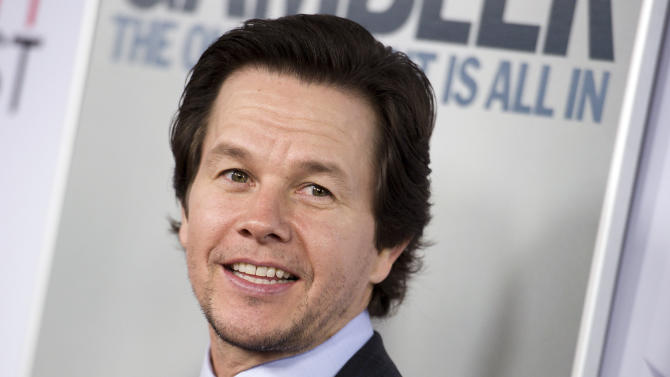
FILE - In this Nov. 10, 2014, file photo, Mark Wahlberg arrives at the 2014 AFI Fest - "The Gambler," in Los Angeles. Wahlberg asked Massachusetts for a pardon for assaults he committed in 1988 when he was a teenager in Boston. Wahlberg’s application with the Massachusetts Parole Board said he isn’t the same person he was 26 years ago and his past convictions are still affecting his life. Victims of one of Mark Wahlberg’s racially motivated attacks as a teenage delinquent in segregated 1980s Boston are divided over whether the actor should get the pardon he’s seeking. (Photo by Richard Shotwell/Invision/AP, File)
.


BOSTON (AP) — A victim of one of Mark Wahlberg's racially motivated attacks as a teenage delinquent in segregated Boston in the 1980s insists he shouldn't be granted a pardon for his crimes.
Kristyn Atwood was among a group of mostly black fourth-grade students on a field trip to the beach in 1986 when Wahlberg and his white friends began hurling rocks and shouting racial epithets as they chased them down the street.
"I don't think he should get a pardon," Atwood, now 38 and living in Decatur, Georgia, said in an interview with The Associated Press.
"I don't really care who he is. It doesn't make him any exception. If you're a racist, you're always going to be a racist. And for him to want to erase it I just think it's wrong," she said.
Mary Belmonte, the white teacher who brought the students to the neighborhood beach that day, sees things differently. "I believe in forgiveness," she said. "He was just a young kid — a punk — in the mean streets of Boston. He didn't do it specifically because he was a bad kid. He was just a follower doing what the other kids were doing."
The 43-year-old former rapper, Calvin Klein model and "Boogie Nights" actor wants official forgiveness for a separate, more severe attack in 1988, in which he assaulted two Vietnamese men while trying to steal beer. That attack sent one of the men to the hospital and landed Wahlberg in prison.
Wahlberg, in a pardon application filed in November and pending before the state parole board, acknowledges he was a teenage delinquent mixed up in drugs, alcohol and the wrong crowd. He points to his ensuing successful acting career, restaurant ventures and philanthropic work with inner city youths as evidence he's turned his life around.
"I have apologized, many times," he told the AP in December. "The first opportunity I had to apologize was right there in court when all the dust had settled and I was getting shackled and taken away, and making sure I paid my debt to society and continue to try and do things that make up for the mistakes that I've made."
Court documents in the 1986 attack identify Wahlberg among a group of white boys who harassed the school group as they were leaving Savin Hill Beach in Dorchester, a mixed but segregated Boston neighborhood that had seen racial tensions during the years the city was under court-ordered school integration.
The boys chased the black children down the street, repeatedly shouting "n-----" and hurling rocks until an ambulance driver intervened. Wahlberg was 15 at the time.
Atwood says she still bears a scar from getting hit by a rock. No one was seriously injured, but the attack left a lasting impression.
"I was really scared. My heart was beating fast. I couldn't believe it was happening. The names. The rocks. The kids chasing," Belmonte told the AP.
Wahlberg and two other white youths were issued a civil rights injunction: essentially a stern warning that if they committed another hate crime, they would be sent to jail.
In 1988, Wahlberg, then 16, attacked two Vietnamese men while trying to steal beer near his Dorchester home.
According to the sentencing memorandum, he confronted Thanh Lam, a Vietnamese man, as he was getting out of his car with two cases of beer. Wahlberg called Lam a "Vietnam f------ s---" and beat him over the head with a 5-foot wooden stick until Lam lost consciousness and the rod broke in two.
Documents say Wahlberg ran up to another Vietnamese man, Hoa Trinh, and asked for help hiding. After a police cruiser drove past, he punched Trinh in the eye. Later, he made crude remarks about Asians.
Wahlberg ultimately was convicted as an adult of two counts of assault and battery with a dangerous weapon, marijuana possession and criminal contempt for violating the prior civil rights injunction. He was given a three-month prison sentence, of which he served about 45 days.
Trinh declined to be interviewed by AP, and efforts to locate Lam were unsuccessful.
Judith Beals, a former state prosecutor involved in the cases, said Wahlberg's crimes stand out because he violated the injunction with an even more violent attack on people of yet another race.
"It was a hate crime and that's exactly what should be on his record forever," Atwood said.  [Sic]
___
AP reporters Johnny Clark in Atlanta, Steve LeBlanc in Boston and John Carucci in New York contributed to this report.

t's Comments
    t (7)

    • t 15 seconds ago
      You can never rely on the veracity of press accounts, even the once reliable AP, but if MW was 16, he should never have been prosecuted as an adult because he was, in fact, a minor, incompetent under the law to form the requisite intent constituting a crime, and NOT an adult. It is by the same token that a 16 year old can not give permission for sex and is "protected" in theory by laws against statutory rape.

      So the State (prosecutor, supported by a judge, in this instance) perverts the well-settled special treatment for children (juvenile delinquents), throwing them into incarceration with adult criminals of all degrees, where they can be raped or statutorily raped and/or recruited into crime organizations. That in itself is a heinous crime BY the State to deny a minor the legal protections and immunities to which one is, and has always been, entitled. That is patently unjust, a denial of due process, and needs to be sealed and expunged for good! Good Lord! Fortunately, this victim has enough wealth to make the point and fix their corrupt wagon up there in Massachusetts. I hope he does. He could also do well to fund and deploy several dozen lawyers to assist such children caught in an out-of-control and hysterical reaction to rampant crime.

      Meanwhile, the intransigent serial financial felon fugitive Marc Rich gets a bunch of absolute pardons from the disbarred Bill Clinton as arranged by the once honorable Eric Holder. Makes me sick!

      Apart from that, "prison" is for felonies punishable by a year or more. Anyone sentenced to less than a year could not be sent to state prison, as I understand it, but would be sent to the county jail for the three-months sentenced. I expect the AP reporter doesn't understand that. But the BIG issue is that children are NOT criminals to be marked, blacklisted, and damaged forever by criminal records, but are Juvenile Delinquents to be handled in Juvie Hall outside of the standards and practices of the criminal justice system when they can still be diverted, redirected, and reformed into responsible, law-abiding adults.